




Which Mazda Features Help in Sudden Rain?
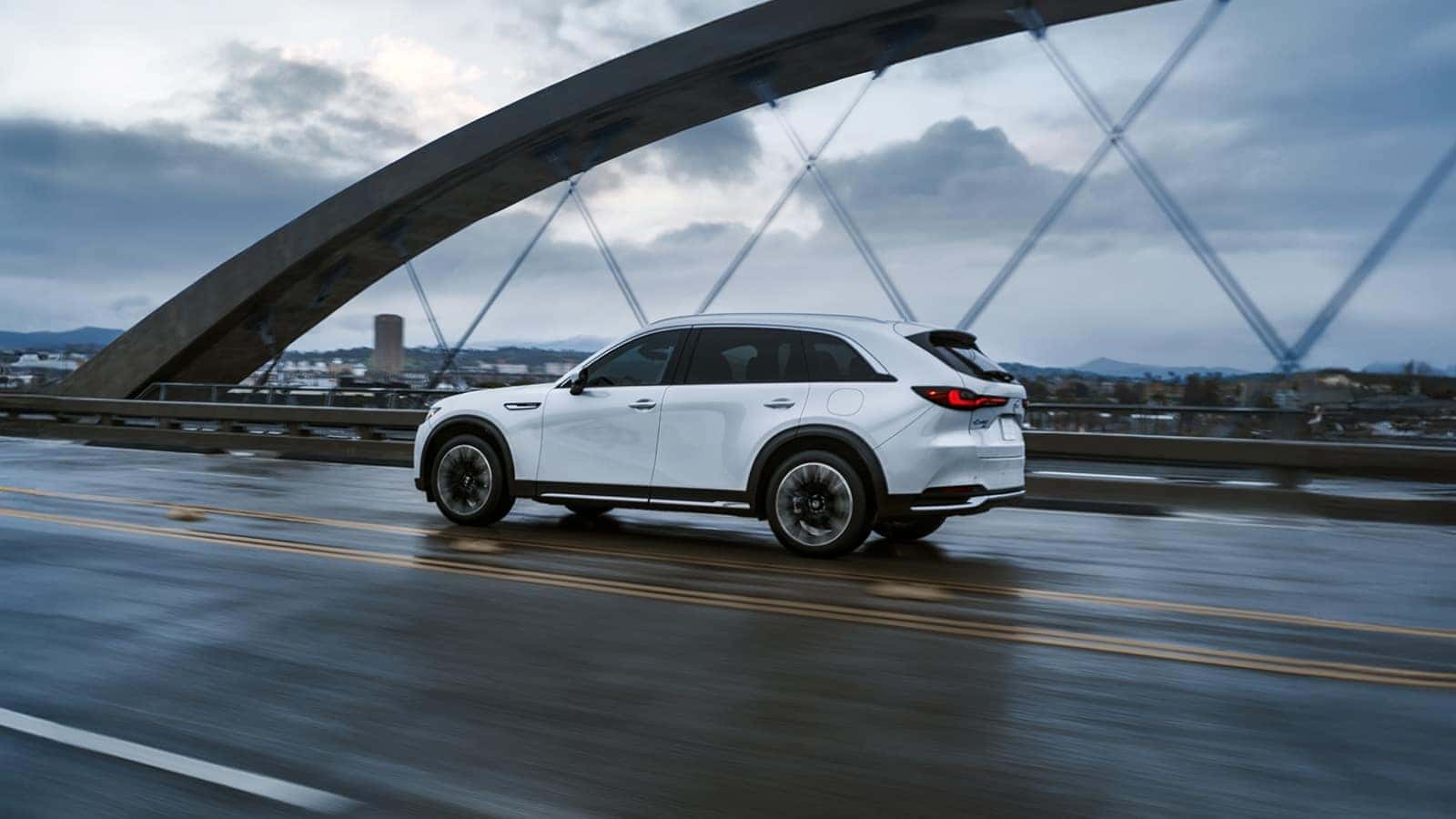
Mazda rain driving features can assist with traction, windshield visibility, and awareness of surrounding traffic, but they cannot replace suitable tires or careful driving. At Hello Mazda of San Diego, part of our parent company, Hello Auto Group, we help shoppers understand how Mazda equipment fits everyday San Diego driving, including an unexpected shower during a freeway commute. The useful comparison is not simply which vehicle has the longest feature list, but which model and trim provides the equipment you understand and will use.
Key Takeaways
- All-wheel drive and traction control serve different purposes on wet roads.
- Rain-sensing wipers and heated mirrors have model-specific and trim-specific availability.
- Heavy rain and road spray can limit Mazda driver-assistance functions.
- Tire condition, appropriate speed, and smooth inputs remain essential.
Mazda AWD and Traction Control on Wet Roads
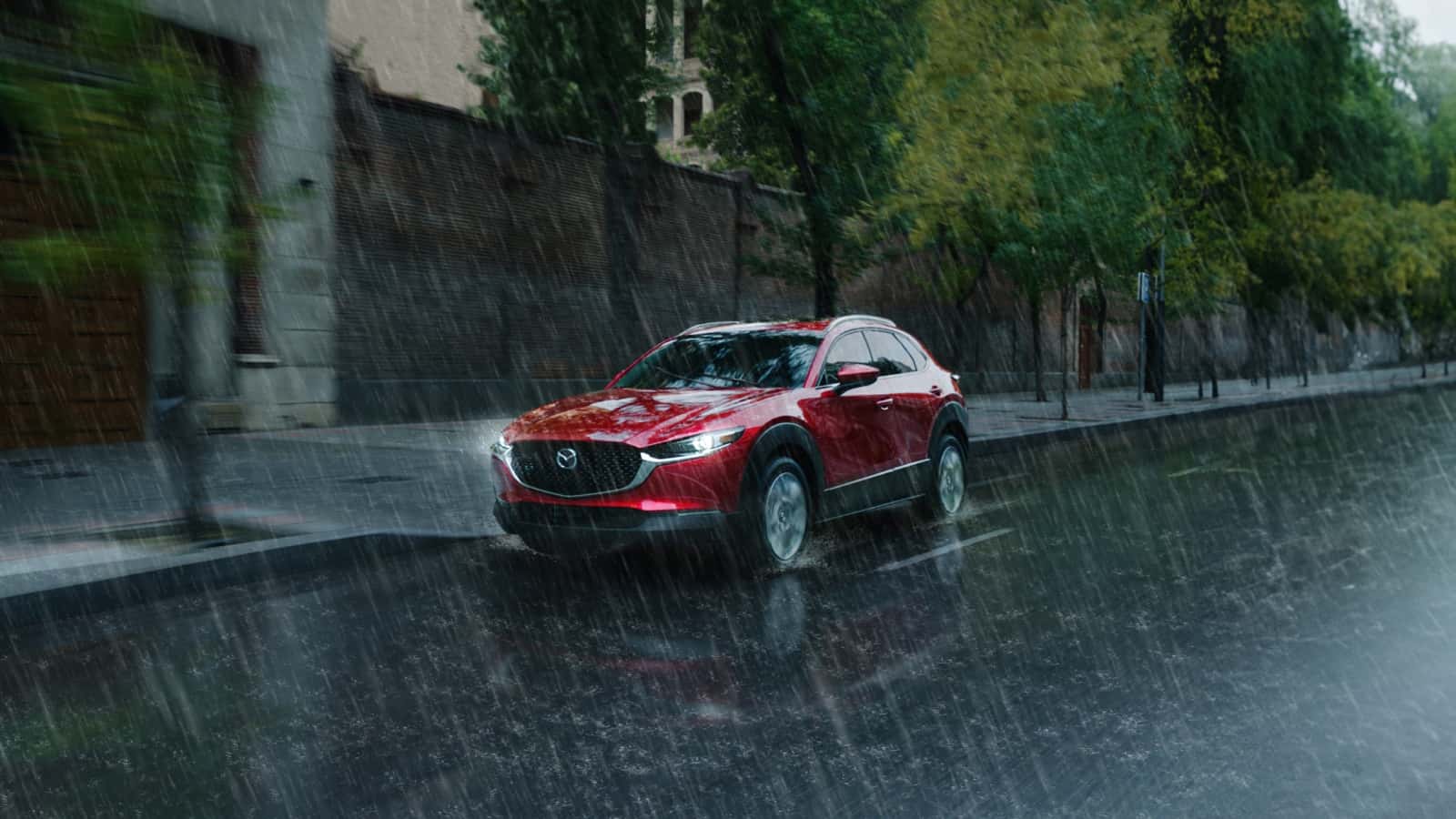
Mazda’s i-Activ all-wheel drive distributes power between the front and rear wheels, while traction control helps manage drive-wheel spin during acceleration. These systems complement each other, but neither makes wet pavement behave like dry pavement.
The CX-50 comes standard with i-Activ AWD, Mazda’s all-wheel-drive system, which monitors vehicle conditions and adjusts torque distribution. The CX-90 also includes standard i-Activ AWD. For shoppers comparing these SUVs, AWD is therefore part of the starting equipment rather than a reason by itself to select a higher trim.
Traction Control System, or TCS, addresses wheelspin when accelerating from a stop or through a corner on a slippery surface. Mazda traction assistance can help manage available grip, but it cannot compensate for excessive speed, abrupt inputs, or hydroplaning, when water reduces tire contact with the road.
A useful comparison we encourage is to look beyond the AWD badge and examine the tires on the actual vehicle. For Mazda wet weather driving, tread condition, correct inflation, and smooth accelerator and steering inputs remain important. AWD does not guarantee shorter wet-road stopping distances.
Which Mazda Trims Offer Rain-Sensing Wipers and Heated Mirrors?
Rain-sensing windshield wipers adjust operation in response to detected rainfall, while heated mirrors help clear condensation from the mirror surface. Availability differs by model and trim, so these Mazda visibility features deserve their own equipment check.
The CX-50 2.5 S Select includes rain-sensing windshield wipers. On the CX-30, the 2.5 S Preferred adds rain-sensing wipers, while the 2.5 S Select Sport already includes heated exterior mirrors. That distinction matters: choosing a trim with heated mirrors does not automatically establish that it also has automatic wipers.
The CX-90 3.3 Turbo Select includes both rain-sensing windshield wipers and heated exterior mirrors. Confirm Mazda rain driving feature availability on the specific vehicle’s window sticker or build sheet, particularly when comparing vehicles from different production periods.
During a vehicle walkthrough, we recommend trying the wiper controls rather than only checking the equipment list. On an equipped CX-50, the automatic setting includes adjustable sensitivity, and manual low- and high-speed operation remains available. Knowing those controls helps when intermittent rain near Clairemont becomes heavier spray on the freeway.
Windshield Visibility Requires More Than Automatic Wipers
Rain-sensing wipers respond to moisture, but clear visibility also depends on clean glass, effective blades, appropriate lighting, and familiarity with defogging controls. Automatic operation is an aid, not a guarantee that the windshield will remain clear under every condition.
Before buying, check the view through the windshield and mirrors from your normal seating position. A showroom comparison between a CX-30 and CX-50 can reveal differences in mirror placement and sightlines that an equipment chart cannot explain.
For families discussing wet-weather preparation for young drivers, we suggest including a parked-vehicle demonstration of wipers, windshield defogging, and lighting controls. Drivers should know how to select those functions before encountering reduced visibility, rather than learning them while traffic is moving.
If you are narrowing your choices, browse our current selection at Hello Mazda of San Diego to identify CX-30 and CX-50 trims with the visibility equipment you want to examine in person.
Mazda Driver Assistance in Rain: Capabilities and Limits
Mazda driver-assistance functions can support hazard awareness and collision avoidance, but heavy rain, obscured sensors, and reduced visibility can affect their operation. Mazda’s i-Activsense name covers multiple assistance technologies, not one system that manages every driving situation.
The CX-50 2.5 S Select includes Smart Brake Support, Blind Spot Monitoring, Lane Departure Warning System, and Lane Keep Assist. Smart Brake Support provides collision-related assistance within its operating conditions; it should not be treated as a substitute for braking yourself. Poor visibility or obstructed sensing equipment can reduce detection capability.
Blind Spot Monitoring helps identify vehicles approaching from behind in adjacent lanes. When considering blind-spot assistance in changing traffic conditions, remember that a mirror warning supplements your own observations. Rain and spray can make lane changes more demanding, including during a commute toward Chula Vista, so leave time to assess surrounding traffic.
Lane-related assistance depends on the system recognizing relevant road information, including lane markings. Rain-obscured markings and spray can interfere with that recognition. Mazda Radar Cruise Control also has operating restrictions, and Mazda cautions against using it on slippery roads. Check the owner’s manual for the vehicle you are considering and take direct control when conditions require it.
How Mazda Safety Evaluations Fit a Rain-Driving Comparison
Mazda safety engineering combines occupant protection with technologies intended to help drivers recognize or respond to hazards. Independent evaluations add useful information, but a safety award is not a certification of performance in every rainstorm.
For shoppers interested in understanding Mazda safety evaluations, the Insurance Institute for Highway Safety evaluates areas such as crashworthiness, crash prevention, and headlights. Crashworthiness concerns occupant protection during a collision, while crash-prevention assessments examine specific avoidance capabilities under defined test conditions.
Use the rating for the exact model year and configuration under consideration. A CX-90 evaluation should not be applied automatically to a CX-50, and an award from one evaluation period should not be presented as a permanent, brand-wide rating.
In a shopping discussion, we separate three questions: what equipment the vehicle includes, how independent testing evaluates it, and how the owner’s manual describes its operating limits. Together, those answers provide more useful guidance than an award badge alone.
Explore Mazda Models for San Diego Driving
Choosing a Mazda for sudden San Diego rain means matching the vehicle’s equipment to your priorities, then confirming how its controls and assistance systems work. A compact CX-30, versatile CX-50, and three-row CX-90 offer different space and equipment combinations, even when they share familiar technology names.
Visit Hello Mazda of San Diego, part of our parent company, Hello Auto Group, to explore our current selection in San Diego and schedule a test drive of the models that fit your needs. We can help you review specific trims, verify visibility equipment, and locate the operating guidance for the vehicle you are considering.
*Penned by AI, polished by humans
0 comment(s) so far on Which Mazda Features Help in Sudden Rain?