




Mazda Safety Features for a Teen’s First Car
Choosing a first vehicle for your teen is a major family decision, especially when everyday driving may include busy freeways, school traffic, parking lots, and coastal commutes around San Diego. At Hello Mazda of San Diego, part of Hello Auto Group, we help parents focus on more than style or price by comparing the Mazda safety features for teen drivers that can support better awareness, visibility, and decision-making from the first drive onward.
Key Takeaways
- A teen’s first car should balance manageable size, clear visibility, strong crash protection, and helpful driver-assist technology.
- Mazda i-Activsense safety technologies can help alert drivers to potential hazards, but they do not replace attentive driving.
- Features such as Smart Brake Support, Blind Spot Monitoring, Rear Cross Traffic Alert, and lane-support systems can be valuable for new drivers.
- The Mazda3, Mazda CX-30, Mazda CX-5, and Mazda CX-50 offer different sizes and configurations for families comparing safe first-car options.
- Parents should compare the exact features included on a specific model year and trim before making a final decision.
What Safety Features Matter Most in a Teen’s First Car?
The best first car safety features are the ones that help a young driver build good habits while providing another layer of support in common driving situations. That matters in San Diego, where a teen may move from neighborhood streets to I-5 or I-805 traffic, navigate crowded shopping centers, and share the road with cyclists, pedestrians, and other inexperienced drivers.
Start with the fundamentals. A teen driver vehicle should feel easy to control, offer a confident driving position, and provide outward visibility that helps the driver see what is happening around the vehicle. Parents should also look for modern restraint systems, multiple airbags, a rearview camera, and the ability to adjust mirrors, steering position, and seating properly.
Beyond those essentials, active safety technology can help a young driver recognize developing hazards. Mazda i-Activsense is the brand’s collection of available driver-assist technologies designed to monitor surrounding conditions, provide alerts, and, in certain situations, offer braking or steering support. These systems are meant to assist the driver, not drive the vehicle for them.
For example, Smart Brake Support can warn a driver of a potential frontal collision and may apply braking assistance in certain conditions if the driver does not respond. This can be especially relevant when a teen is still gaining experience judging following distance in stop-and-go traffic near Clairemont or when approaching an unexpected slowdown on a freeway.
Which Mazda Driver-Assist Features Can Help New Drivers?
Parents often ask, “What Mazda safety features should parents consider for a teen’s first car?” The answer starts with the technology that addresses common new-driver challenges: recognizing vehicles in adjacent lanes, checking behind the vehicle, maintaining awareness during longer drives, and reacting to changing traffic conditions.
Blind Spot Monitoring can alert the driver when another vehicle is detected in a difficult-to-see adjacent area. This is particularly helpful for teens learning to combine mirror checks, shoulder checks, turn signals, and safe lane-change timing. Mazda blind-spot assistance for new drivers can add useful awareness on multi-lane roads, but it should reinforce, never replace, a complete visual check before moving over.
Rear Cross Traffic Alert can be another valuable feature for young drivers backing out of parking spaces. In busy areas around San Diego, a teen may encounter pedestrians, shopping carts, vehicles moving behind the car, or limited sightlines between larger SUVs. A rearview camera remains important, while rear cross-traffic alerts can provide an additional prompt to pause and look carefully.
Lane Departure Warning and Lane-keep Assist may help alert a driver when the vehicle begins to drift from its lane without a signal. For a teen learning the rhythm of freeway driving, these features can be useful reminders to stay focused and maintain smooth steering inputs. Mazda Radar Cruise Control can also help manage following distance during highway driving, although parents should make clear that the driver remains responsible for paying attention and controlling the vehicle.
Automatic high-beam capability, available on select Mazda models and trims, may help improve nighttime awareness by adjusting high-beam use when conditions allow. That can be beneficial for teens driving home after evening activities, but new drivers should still understand when reduced visibility, weather, or oncoming traffic requires extra caution.
How Should Parents Compare Mazda Models?
A safe first car is not identical for every family. Some parents prefer a compact sedan that is easy to park and economical to operate, while others want the elevated seating position and cargo flexibility of a small SUV. The right choice depends on your teen’s comfort level, typical driving routes, passenger needs, and the features included on the exact vehicle.
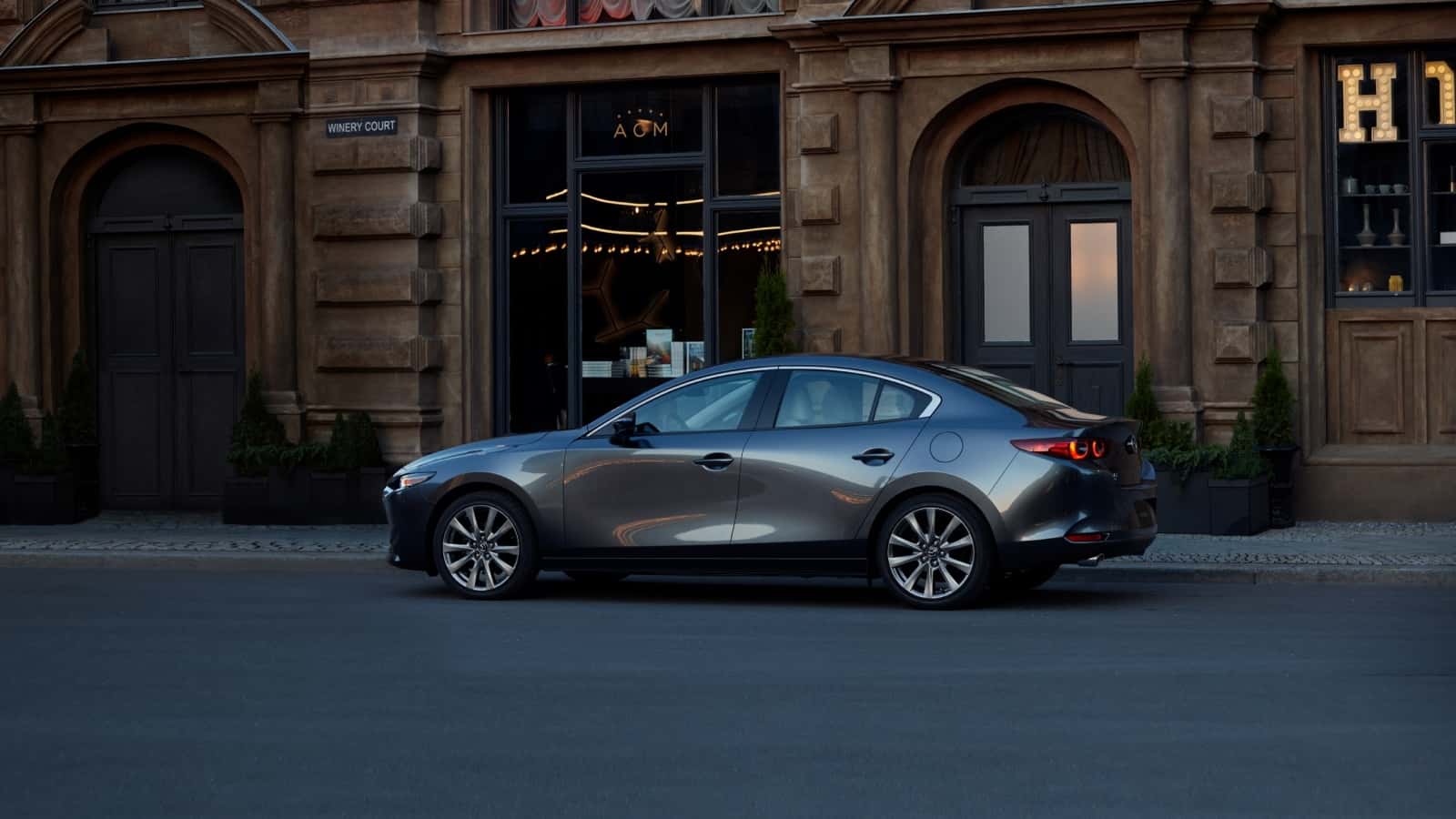
The Mazda3 Sedan is worth considering for families who want a compact, refined vehicle with a driver-focused cabin. Its manageable footprint can make parking and navigating tight spaces less intimidating for a new driver. The Mazda3 Hatchback can appeal to families that want additional cargo versatility while keeping the same compact-car approach.
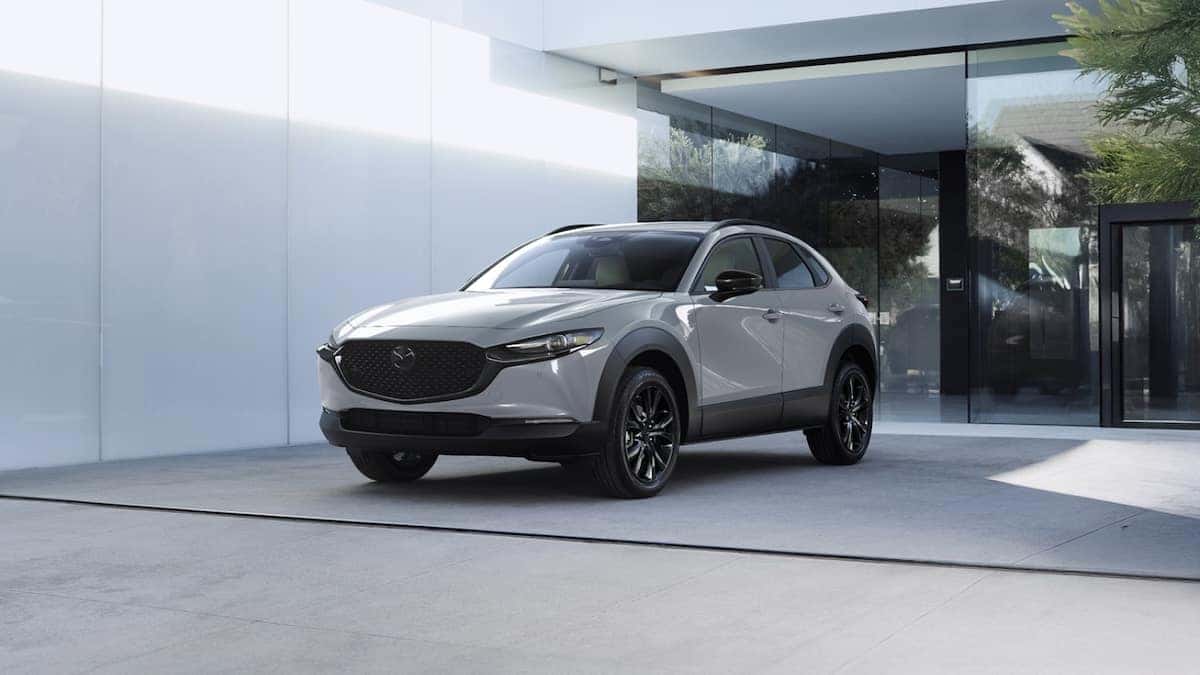
For parents comparing small SUVs, the Mazda CX-30 offers a higher seating position and compact dimensions that may feel approachable to a teen who prefers crossover styling. It is a practical option for school, activities, and weekend errands without stepping into a larger vehicle class.
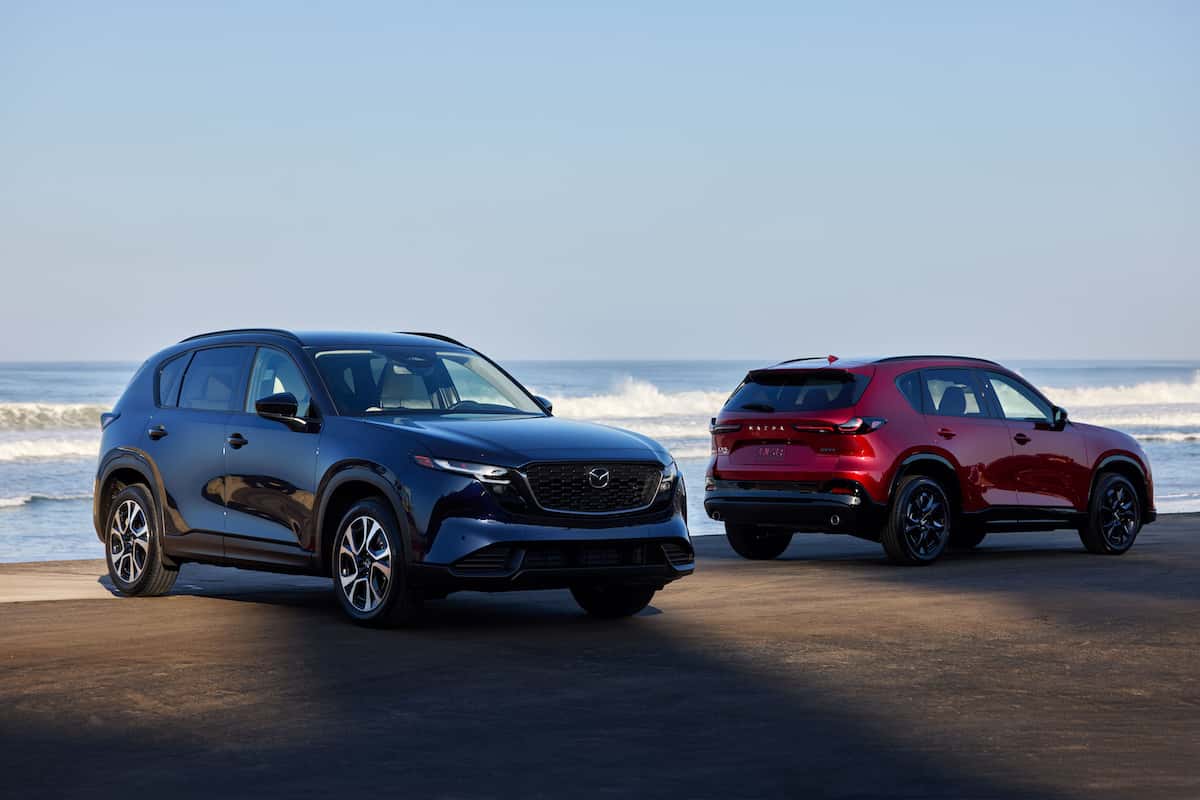
The Mazda CX-5 can make sense when a family needs more passenger room and cargo space. It gives teens and parents the flexibility of a compact SUV while offering a broad range of available safety and driver-assist features. Families considering a slightly more adventurous, active-lifestyle SUV may also want to compare the Mazda CX-50, especially if outdoor gear, road trips, or additional utility are part of the household routine.
When comparing options, do not assume every feature is standard across every trim. Ask to review the vehicle’s equipment carefully, including braking support, blind-spot technology, lane-support features, parking aids, and camera systems. Understanding Mazda safety ratings can also be a useful part of the process, alongside reviewing current safety information for the specific model year and body style under consideration.
What Should San Diego Parents Test Before Buying?
A test drive is not just about deciding whether a vehicle feels comfortable. It is an opportunity for a parent and teen to evaluate practical safety details together. Sit in the driver’s seat, adjust the mirrors, and make sure your teen can reach the pedals and controls comfortably without compromising their view of the road.
During the drive, evaluate how easily your teen can judge the vehicle’s size, use the infotainment controls without distraction, and understand the alerts from available Mazda driver-assist features. Have them practice parking, backing up, checking mirrors, and merging when conditions allow. A vehicle should feel reassuring, not overwhelming.
Visit Hello Mazda of San Diego, part of Hello Auto Group, to browse our current selection of Mazda vehicles in stock and compare safety-focused options for your teen’s first car. Our team can walk you through available features, help your family evaluate the right fit, and schedule a test drive in San Diego.
*Penned by AI, polished by humans
0 comment(s) so far on Mazda Safety Features for a Teen’s First Car